

Material preparation


How to prepare your steel for hot-dip galvanizing
Truly high-quality corrosion protection begins already at the design stage of the steel structure. The structural design, chemical composition, thickness, roughness and grade of the base material — all of these are factors that significantly affect the appearance, layer and structure of the zinc surface. Once you decide to treat your steel product by hot-dip galvanizing, you should follow the technical recommendations below. Only then will you achieve the best results.

Is anything unclear to you?
Please consult everything in advance with your chosen galvanizing plant.


Choose a suitable structural design
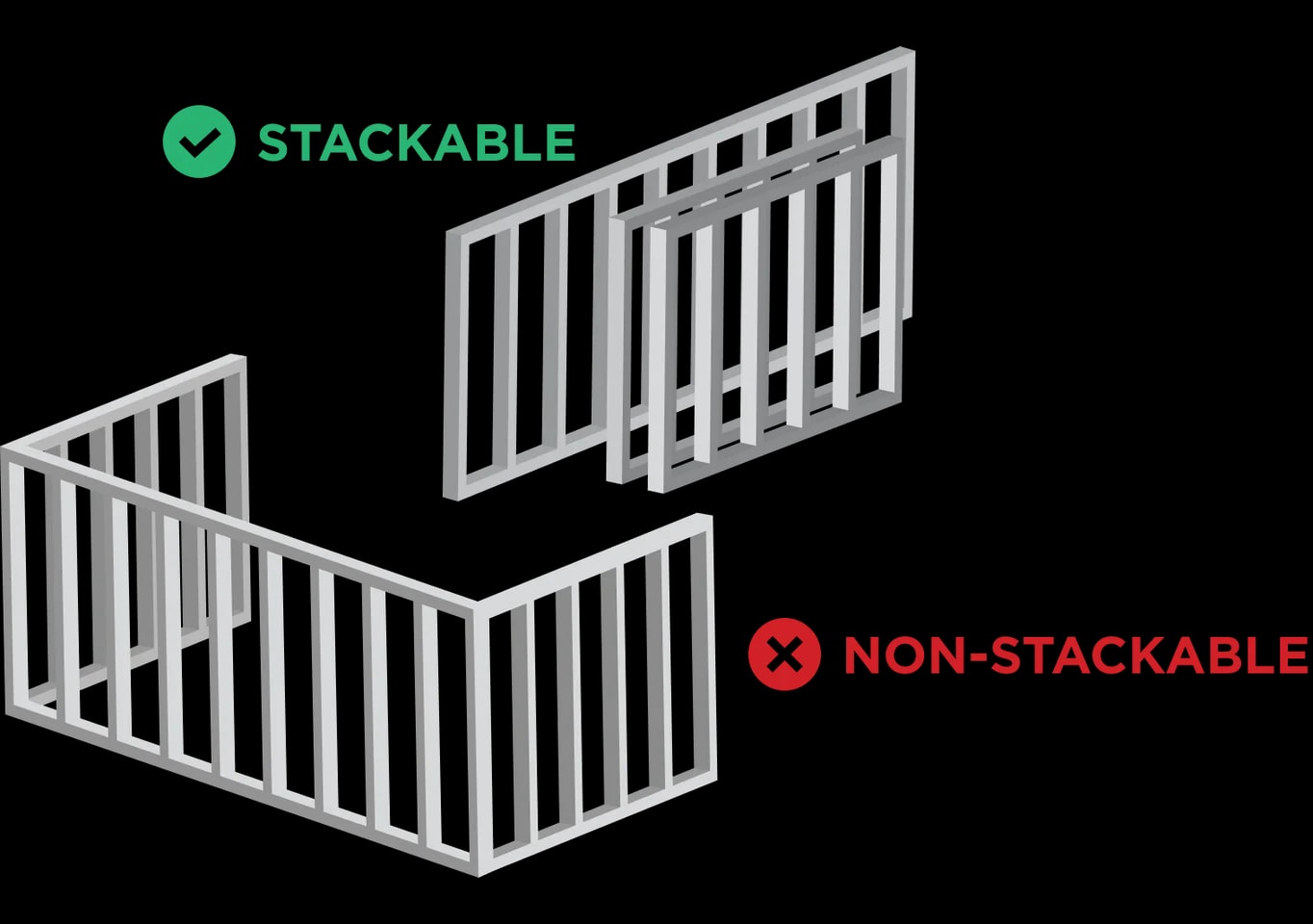
All structures intended for galvanizing should be made so that they can be easily hung and immersed in the zinc bath, and therefore must have suitable technological openings. Below, see examples of structures suitable and unsuitable for hot-dip galvanizing and get to know our tips on what to watch out for when designing and modifying structures.
Ensure inlet and outlet openings. Avoid dead corners and angles.
Due to the high risk of material explosion, structures must be provided with suitable inlet and outlet openings. Their arrangement and size affect the quality of hot-dip galvanizing.
We do not recommend open (bulky) structural parts
With open structural parts, problems occur both during galvanizing and transport. Galvanizing of flat structural parts is of higher quality and more economical for both the supplier and the customer of hot-dip galvanizing.
Prevent deformations
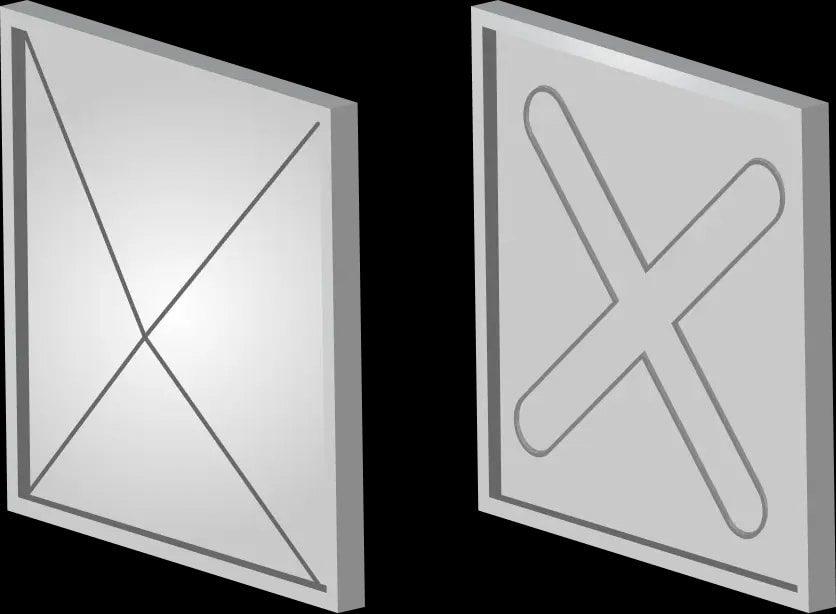
Do not forget about the risk of stress (expansion) of the material when immersed in the zinc bath (approx. 450 °C). For example, we recommend galvanizing sheets, expanded metal and box frames separately.
Watch out for the correct venting of double material
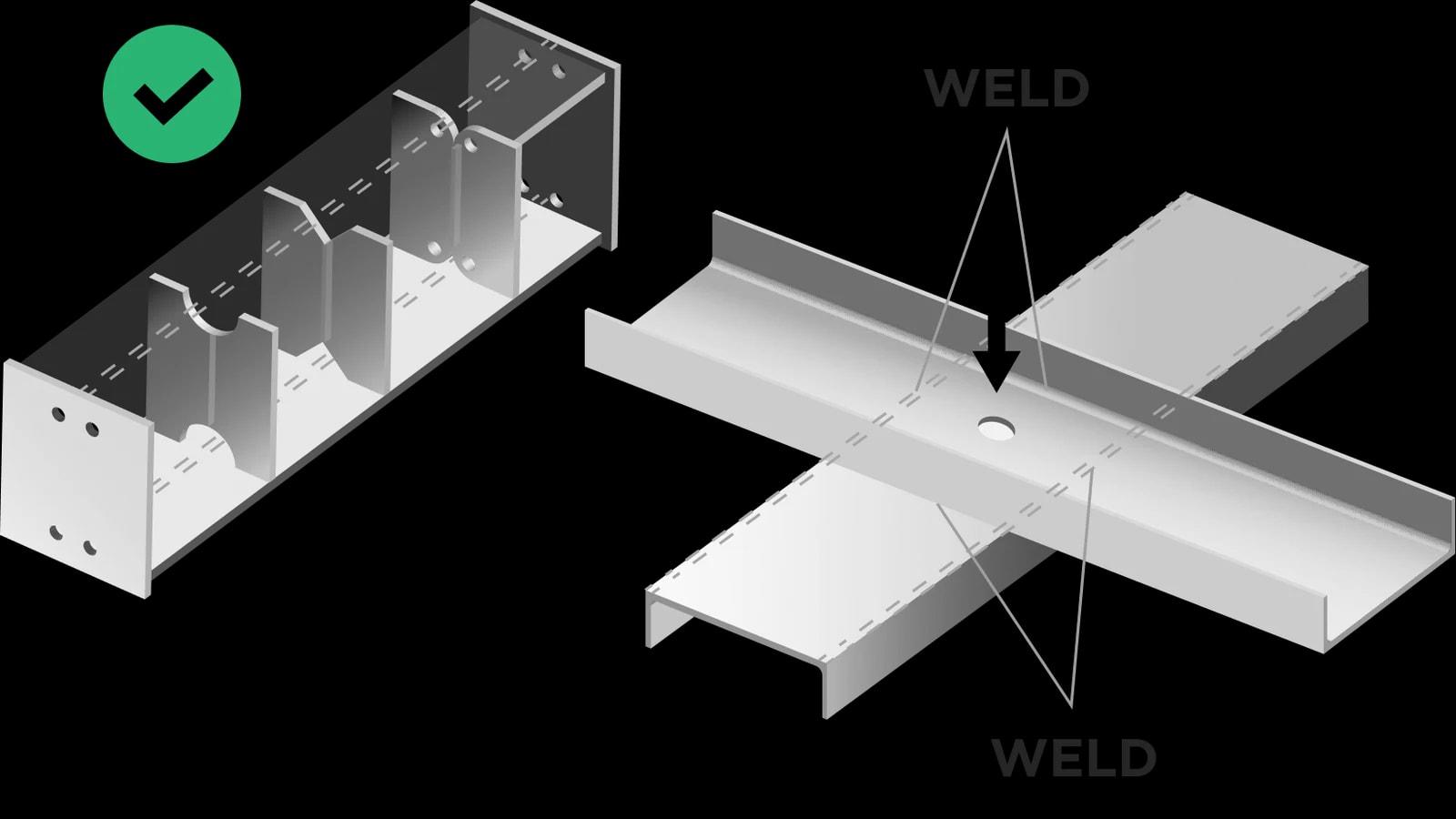
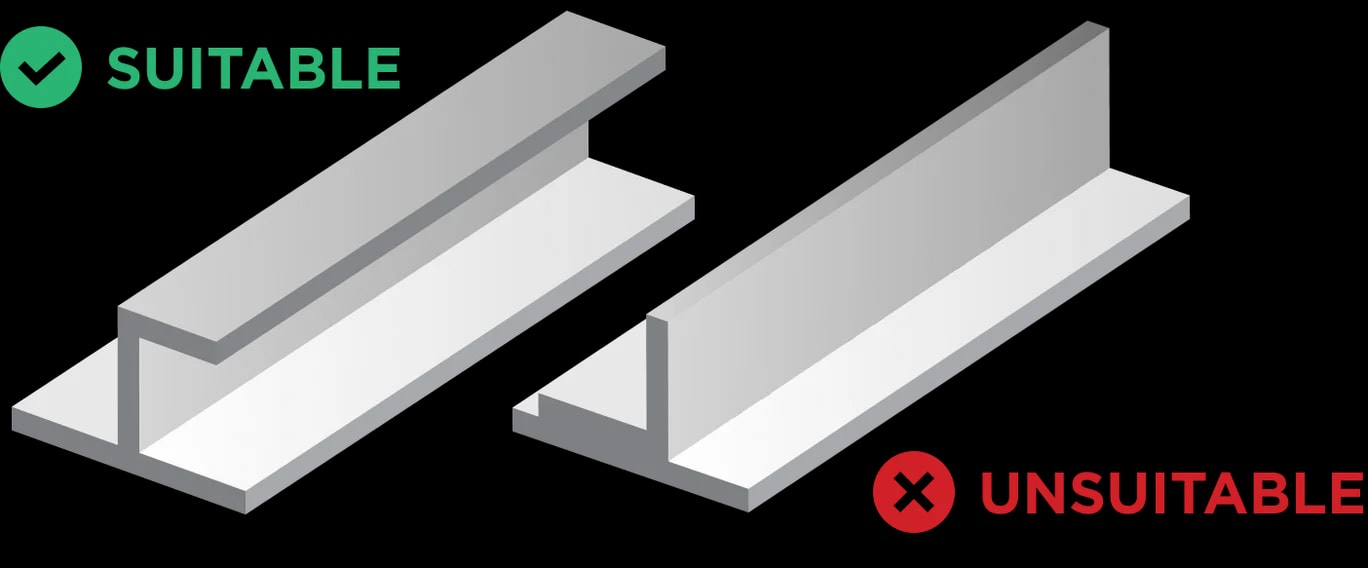
Do not weld profiles flat
We recommend avoiding the use of material with different wall thickness.
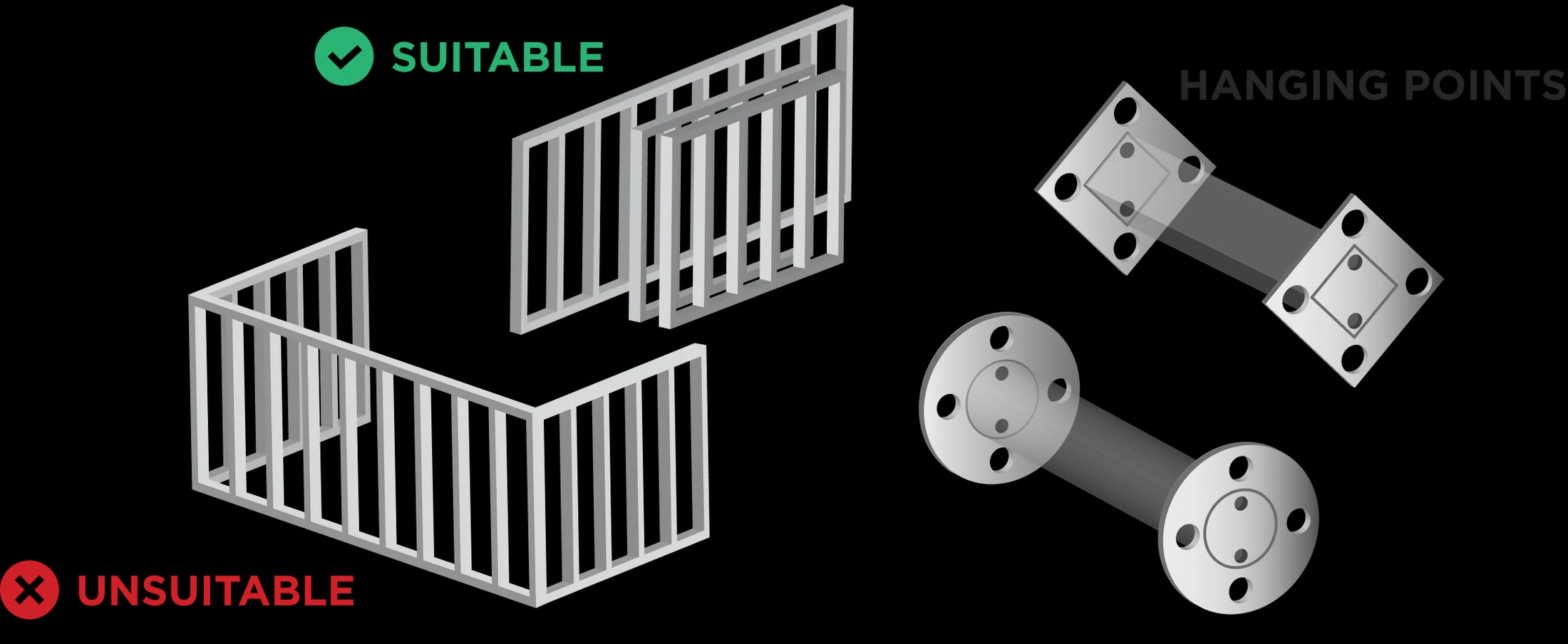
Allow for hanging
We recommend placing the inlet and outlet openings in a vertical plane with the openings for hanging.
Technical recommendations and common mistakes before galvanizing
Proper preparation of the material before galvanizing saves time and costs. It is important to pay attention to the type of steel, the welding method and the cleanliness of the surface so that the resulting zinc coating is high-quality, uniform and durable.

- On incorrectly constructed parts, residues of flux and zinc ash can accumulate.
- Heterogeneity of the structure (sheet, profile steel of different thicknesses) causes a different surface appearance during cooling, possibly thermal deformations. Therefore it is advisable to galvanize sheet parts separately.
- Products cut by laser or plasma must have deburred, ground edges and ground cut surfaces. This way you achieve better adhesion of zinc on the edges of the products.
- With cold-formed profiles, the zinc coating may thicken in strips along the drawing direction. This does not limit the protective properties of the coating in any way.
- Galvanizing of steel parts whose size approaches or exceeds the size of the zinc bath should be consulted in advance with the production manager.
- Also inform us about the subsequent surface treatment of the material (duplex, painting, powder coating, etc.) or about the need to preserve functional surfaces of the structure.

- Paint on the material intended for galvanizing
- Extremely greasy or preserved material
- Deep corrosion
- Slag (electrode), glass (CO2), gaps, pores and burns in welds
- Inadequate structural design, e.g. combining materials with too different thickness
- During welding, it is not advisable to use products containing silicone. We recommend consulting separation agents for welding processes with our galvanizing plant (e.g. Spectra WT 20, Spectra Weld LP 101).
- Paint markers are not ideal for hot-dip galvanizing – we recommend alcohol-based or water-based markers.
The role of material composition and silicon content in steel
The overall result of the hot-dip galvanizing process is significantly affected by the exact chemical composition of the steel intended for galvanizing.
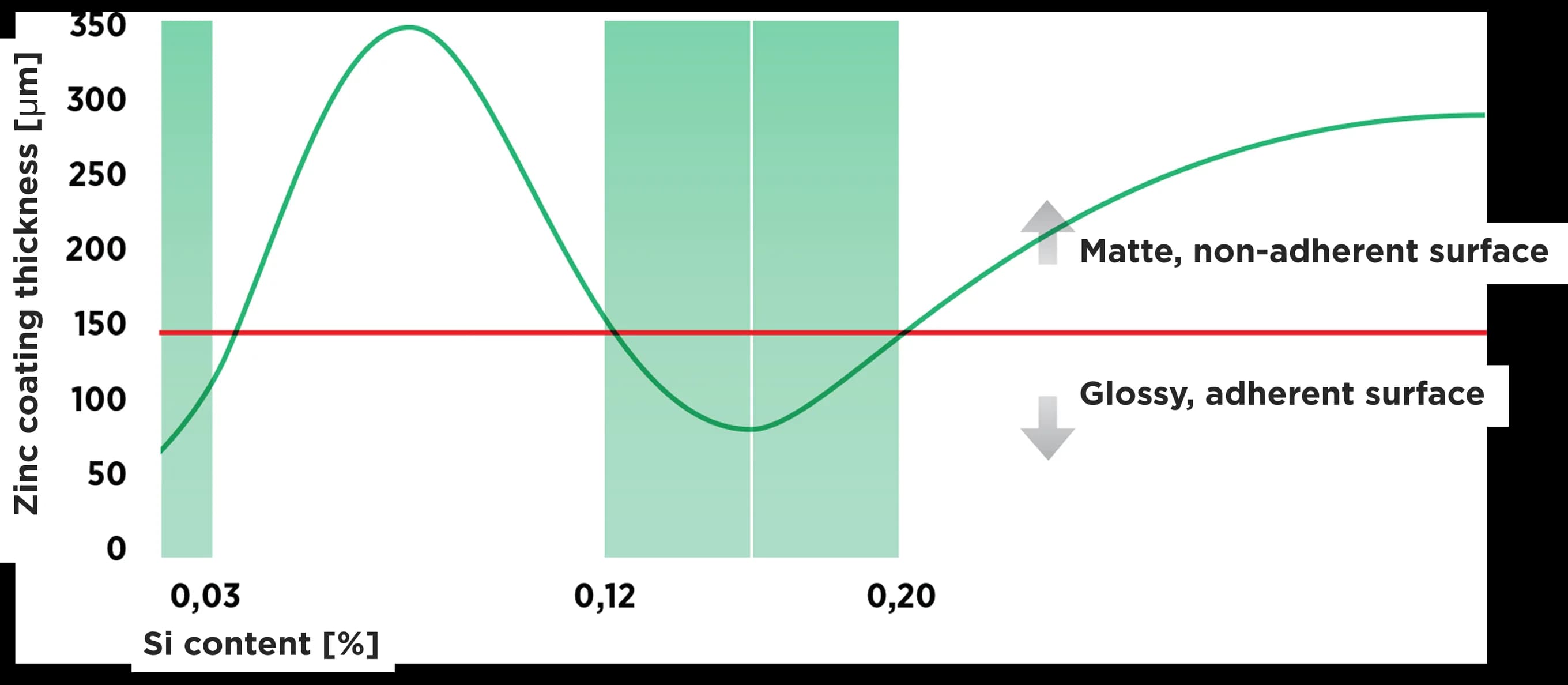
Sandelin diagram
Hot-dip zinc coatings applied to low-reactive steels with a low silicon content (up to 0.03 %) are characterized by a fine structure and have good mechanical resistance. From the Sandelin diagram it is evident that the critical (i.e. unsuitable for galvanizing) silicon contents are in the intervals 0.03 % to 0.12 % and further above 0.25 %. These silicon contents result in increased reactivity of iron with zinc and the coating thicknesses of such steels reach extreme values. Very thick coatings are typically characterized by reduced adhesion to the steel and a high risk of delamination of the zinc layer.


We are happy to advise you
Do not hesitate to contact us, our galvanizing plants will be glad to help you with any order. To get in touch, choose the one nearest to you.
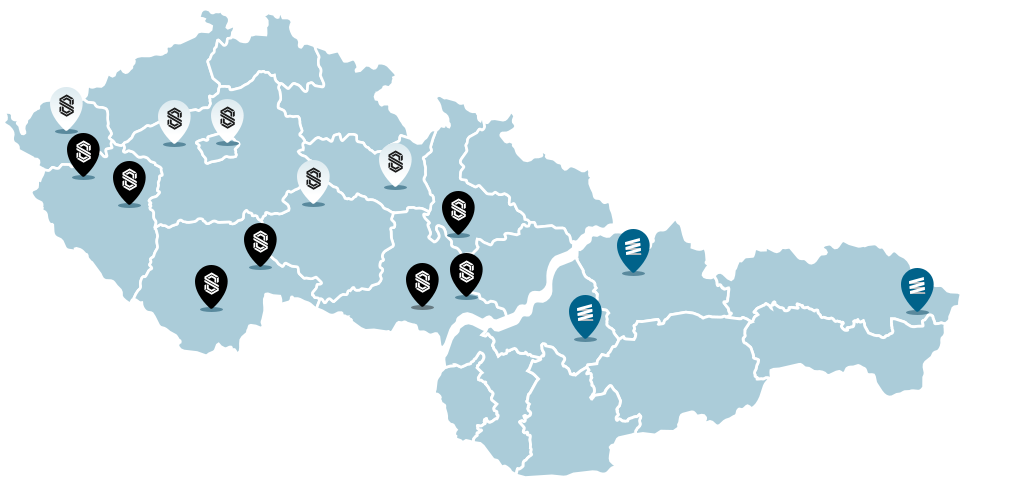
We operate 3 galvanizing plants in Slovakia, 7 in the Czech Republic and 2 in Croatia. We also have 5 collection points.